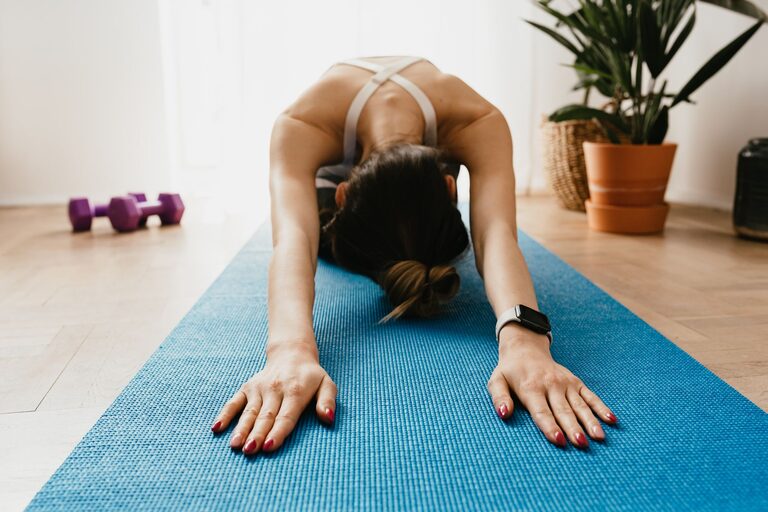
Stretching is a simple and effective way to improve your flexibility, reduce muscle tension, and enhance your overall sense of well-being. You don’t need a gym or special equipment—just a little time and some space at home. If you’re new to stretching, this beginner’s guide will walk you through the basics, share key tips, and suggest easy stretches you can try right away.
Why Stretch at Home?
Stretching regularly helps maintain healthy range of motion in your joints, decreases the risk of injury, and can even reduce stress. Doing it at home is convenient—you can fit it into your routine anytime, whether it’s morning, evening, or during a work break.
Important Tips Before You Start
Before jumping into stretches, keep these guidelines in mind to stay safe and get the most benefits:
– Warm up first: Stretching is best done when muscles are warm. Try a few minutes of light activity like walking or marching in place.
– Move slowly: Ease into each stretch gently to avoid strain.
– Breathe deeply: Slow, steady breathing helps your muscles relax.
– Don’t bounce: Avoid bouncing movements that can cause injury.
– Listen to your body: A stretch should feel good, not painful. If you feel sharp pain, stop immediately.
– Hold the stretch: Aim to hold each position for 15 to 30 seconds.
Basic Types of Stretching
Understanding the types of stretches will help you decide what’s right for your needs:
Static Stretching
This is the most common type where you move into a stretch and hold it. It’s ideal after exercise or anytime you want to improve flexibility over time.
Dynamic Stretching
Involves moving parts of your body through a full range of motion, like gentle leg swings or arm circles. This is great as a warm-up to get blood flowing.
Passive Stretching
Involves using an external force—like a strap or your hands—to deepen the stretch. Be careful not to overstretch.
Active Stretching
Uses your own muscle strength to hold a stretch position without support.
Simple Stretches to Try at Home
Here are some beginner-friendly stretches that target common tight areas:
1. Neck Stretch
– Sit or stand tall.
– Slowly tilt your head toward your right shoulder until you feel a gentle stretch on the left side of your neck.
– Hold for 20 seconds, then switch sides.
2. Shoulder Stretch
– Extend your right arm across your chest.
– Use your left hand to press your arm closer to your chest.
– Hold for 20 seconds, then switch arms.
3. Chest Opener
– Clasp your hands behind your back.
– Straighten your arms and lift your chest.
– Hold for 20-30 seconds.
4. Standing Hamstring Stretch
– Stand with your feet hip-width apart.
– Step your right foot forward and flex the foot.
– Hinge at your hips and reach toward your right toes, keeping your back straight.
– Hold for 20 seconds and switch legs.
5. Seated Spinal Twist
– Sit on the floor with legs extended.
– Bend your right knee and place your right foot over your left leg.
– Twist your torso gently right, placing your left elbow outside your right knee.
– Hold for 20 seconds, then switch sides.
6. Cat-Cow Stretch (for the back)
– Get on all fours with hands under shoulders and knees under hips.
– Inhale to arch your back (cow), lifting your head and tailbone.
– Exhale to round your spine (cat), tucking your chin and pelvis.
– Repeat 5-10 times.
7. Calf Stretch
– Stand facing a wall, place your hands on it.
– Step back with one foot and press the heel into the floor.
– Keep the back leg straight.
– Hold for 20 seconds, then switch legs.
Creating a Stretching Routine
Start with 10 to 15 minutes a day and adjust as you feel comfortable. Here’s a simple routine suggestion:
- Warm up with light activity (e.g., walking in place) – 3 minutes
- Neck stretch – 20 seconds each side
- Shoulder stretch – 20 seconds each arm
- Chest opener – 30 seconds
- Hamstring stretch – 20 seconds each leg
- Seated spinal twist – 20 seconds each side
- Cat-Cow stretch – 5 rounds
- Calf stretch – 20 seconds each leg
Repeat the routine 3 to 4 times a week, increasing duration or adding new stretches as you progress.
Benefits You Can Expect
With regular stretching, you may notice:
– Improved flexibility and mobility
– Reduced muscle tightness and soreness
– Better posture
– Increased blood flow and circulation
– Reduced stress and tension
Final Words
Stretching at home is a low-cost, accessible way to care for your body. By starting slow and being consistent, you can develop a habit that supports your health and comfort every day. Remember, it’s never too late to begin stretching!
Try these simple stretches today and enjoy the benefits of a more flexible, relaxed body.
About the Author